Medik Blog
How Many Functions Does an ICU Bed Really Need?
When hospitals compare ICU beds, the number of functions is often one of the first specifications they notice.
A 3-function bed, 5-function bed, 7-function bed, or even a bed with more functions may appear to offer different levels of capability. However, a higher number of functions does not automatically mean that a bed is more suitable for every intensive care unit.
The right question is not simply “How many functions does an ICU bed have?” but rather “Which functions does the ICU actually need?”
This guide explains the most common ICU bed functions and what hospitals should consider when selecting a suitable configuration.
What Does “Function” Mean on an ICU Bed?
The term “function” usually refers to an independently adjustable part or position of the bed.
For example, an ICU bed may allow the user to adjust:
• Backrest
• Knee or leg section
• Overall bed height
• Trendelenburg position
• Reverse Trendelenburg position
• Lateral lifting
Depending on the manufacturer and model, additional functions may include automatic contour positioning, chair position, CPR positioning, or other specialized adjustments.
However, there is no universal rule that defines an ICU bed simply by the number of functions it has. Different manufacturers may count functions differently.
Therefore, hospitals should always review the actual specifications and available positions instead of comparing models only by the function count.
The Most Common ICU Bed Functions
1. Backrest Adjustment
Backrest adjustment is one of the most common functions on an electric ICU bed.
It allows the upper section of the mattress platform to be raised or lowered according to the patient's needs and the procedure being performed.
It can also provide more comfortable positions for patients who need to remain in bed for extended periods.
For hospitals, it is useful to check the adjustment range and how easily the position can be controlled.
2. Knee or Leg Section Adjustment
The knee or leg section can be adjusted independently on many ICU beds.
This function provides additional positioning options and can be combined with backrest adjustment to create different patient positions.
When comparing beds, hospitals should check whether the leg section is independently adjustable and whether the movement is suitable for the intended clinical use.
3. Height Adjustment
Height adjustment allows the entire bed platform to be raised or lowered.
This is particularly useful because healthcare professionals perform many different tasks around the patient's bed.
A lower position can make it easier for patients to get in or out of bed when appropriate, while a higher working position can provide staff with more convenient access to the patient.
When evaluating this function, consider both the minimum and maximum bed height rather than simply checking whether height adjustment is available.
4. Trendelenburg Position
The Trendelenburg function tilts the entire mattress platform so that the patient's head is positioned lower than the feet.
This is a commonly available positioning function on many advanced hospital and ICU beds.
Hospitals should consider whether the bed provides the required adjustment range and whether the position can be activated quickly when needed.
5. Reverse Trendelenburg Position
Reverse Trendelenburg tilts the mattress platform in the opposite direction, with the head end higher than the foot end.
Together, Trendelenburg and reverse Trendelenburg provide additional positioning flexibility.
These functions may be particularly useful when the clinical workflow requires different patient positions.
So, How Many Functions Does an ICU Bed Need?
There is no single number that is appropriate for every hospital.
A general ICU may require a combination of:
• Backrest adjustment
• Knee or leg adjustment
• Height adjustment
• Trendelenburg
• Reverse Trendelenburg
• Emergency CPR positioning
However, the actual requirement depends on the hospital's clinical protocols, patient population, staff workflow, and budget.
For this reason, hospitals should define their required functions before comparing different models.
Is a 5-Function ICU Bed Enough?
A 5-function ICU bed can provide several important positioning options, depending on how the manufacturer defines the functions.
For example, a configuration may include:
• Backrest adjustment
• Knee section adjustment
• Height adjustment
• Trendelenburg
• Reverse Trendelenburg
Another manufacturer may count functions differently.
Therefore, the term “5-function ICU bed” alone does not provide enough information to determine whether a particular model is suitable.
Always look at the actual functions included in the specification.
Is a 7-Function ICU Bed Better?
Not necessarily.
A 7-function ICU bed may provide additional positioning or adjustment functions compared with a simpler model. These additional functions may be useful in certain clinical environments.
However, hospitals should consider whether the extra functions are actually required.
Additional functions can also mean:
• More components
• More controls
• More maintenance requirements
• Higher purchase cost
• More training for staff
The goal should be to select the appropriate configuration, rather than simply choosing the bed with the highest function count.
What Functions Should Hospitals Prioritize?
Instead of focusing only on the total number of functions, hospitals can divide ICU bed functions into several practical categories.
1. Essential Positioning
The bed should provide the positions required for routine patient care.
For many ICU applications, this may include:
• Backrest adjustment
• Knee adjustment
• Height adjustment
• Trendelenburg
• Reverse Trendelenburg
2. Emergency Functions
Emergency operation should also be considered.
A quick CPR release or other emergency positioning mechanism can allow staff to prepare the bed rapidly when urgent intervention is required.
The exact mechanism varies between models, so hospitals should evaluate how it works in practice.
3. Patient Safety
Some features are not always counted as “bed functions,” but they can be just as important.
These may include:
• Side rails
• Central locking system
• Reliable casters
• Bed stability
• Appropriate safe working load
For this reason, two beds with the same number of functions may provide very different overall configurations.
4. Don't Forget About Bed Controls
The number of functions is only part of the user experience.
A bed with many adjustment options may become less practical if staff have difficulty finding or operating the controls.
When evaluating an ICU bed, hospitals should consider:
• Hand controller design
• Side-rail controls
• Visibility of controls
• Ease of operation
• Emergency controls
• Protection against accidental operation
If the bed will be used by many staff members, simple and intuitive operation can be particularly valuable.
More Functions Can Mean More Maintenance
Each additional electrical or mechanical function can introduce additional components that may require inspection and maintenance.
This does not mean that hospitals should avoid advanced ICU beds. Instead, buyers should understand the maintenance requirements before purchasing.
Ask the manufacturer about:
• Motor and actuator maintenance
• Electrical inspection
• Battery maintenance
• Replacement parts
• Side rail inspection
• Caster maintenance
• Recommended service intervals
• Technical support
A suitable ICU bed should balance functionality with long-term reliability and maintainability.
Consider the Total Cost, Not Just the Number of Functions
When comparing two ICU beds, it can be tempting to select the model with more functions if the price difference is relatively small.
However, hospitals should consider the complete cost of ownership.
This may include:
• Initial purchase price
• Accessories
• Installation
• Maintenance
• Replacement parts
• Staff training
• Expected service life
If a function is rarely used, paying extra for it may not provide meaningful value for that particular application.
On the other hand, an essential function should not be omitted simply to reduce the initial purchase price.
A Simple Way to Compare ICU Beds
Hospitals can create a simple comparison table before requesting quotations.
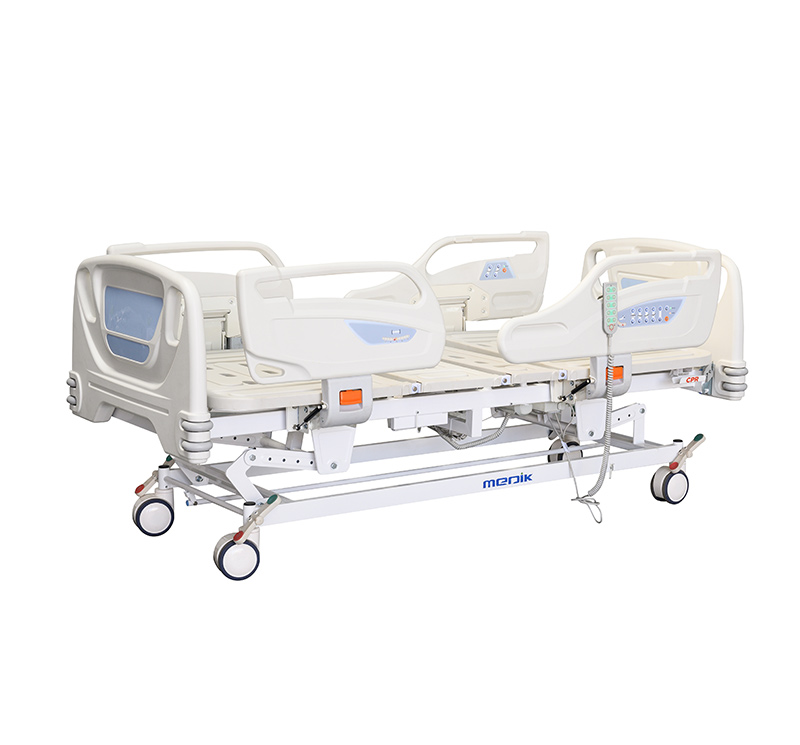
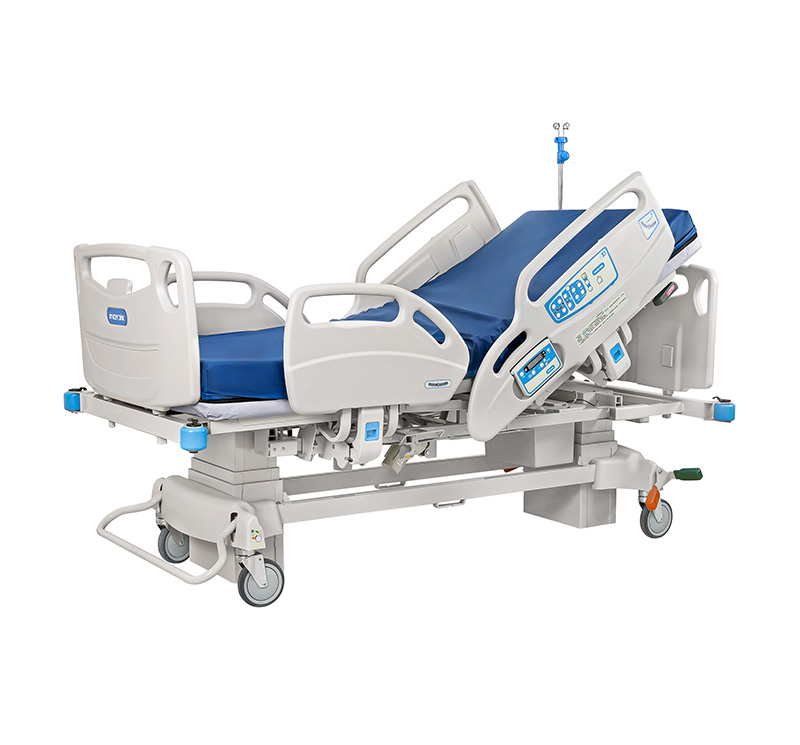
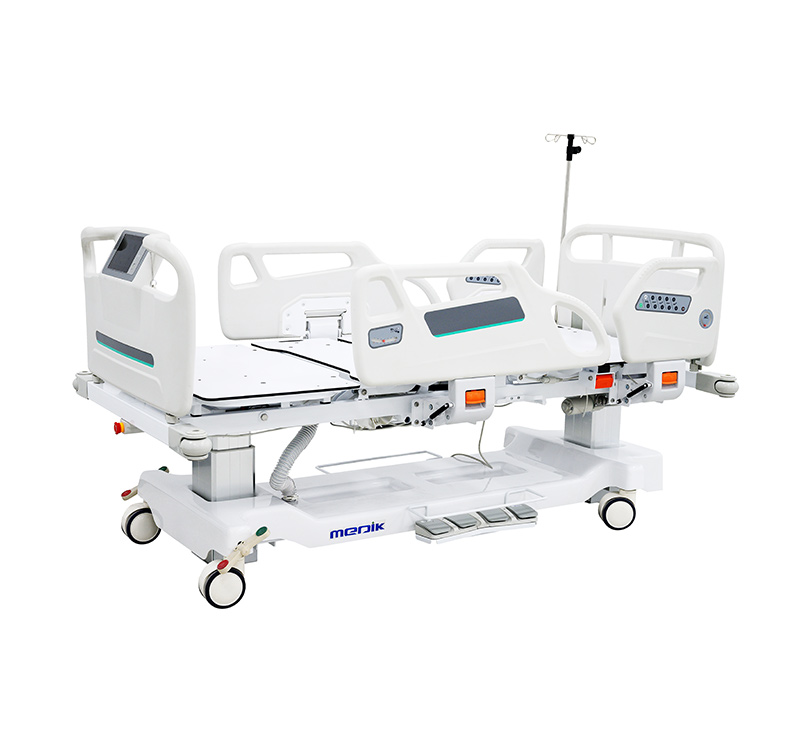
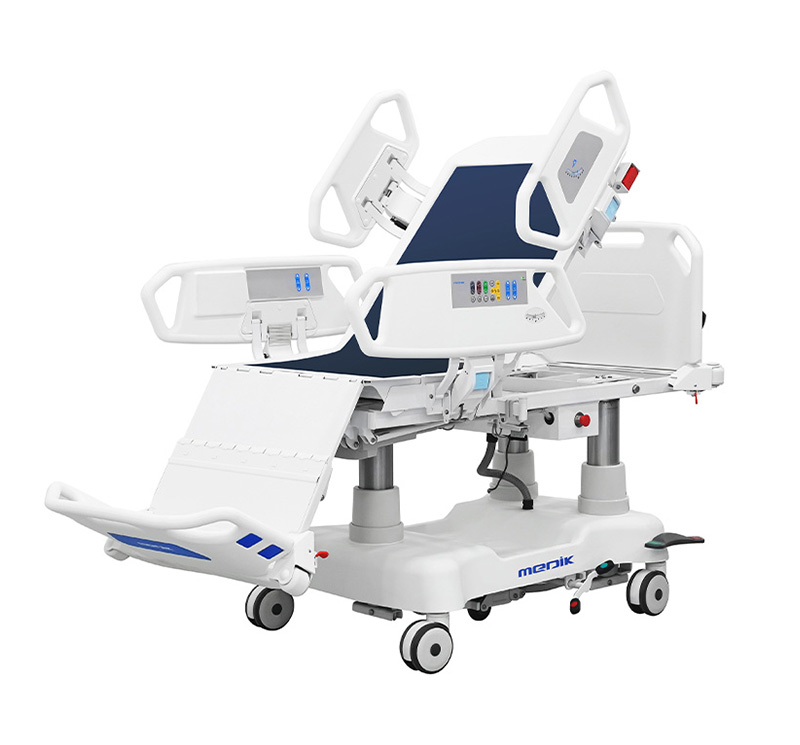
| Feature | Required | YA-D5-3 | YA-D6-1 | YA-D7-3 | YA-D8-2 |
| Backrest adjustment | Yes | ✓ | ✓ | ✓ | ✓ |
| Knee adjustment | Yes | ✓ | ✓ | ✓ | ✓ |
| Height adjustment | Yes | ✓ | ✓ | ✓ | ✓ |
| Trendelenburg | Yes | ✓ | ✓ | ✓ | ✓ |
| Reverse Trendelenburg | Yes | ✓ | ✓ | ✓ | ✓ |
| CPR function | Yes | ✓ | ✓ | ✓ | ✓ |
| Side rails | Yes | ✓ | ✓ | ✓ | ✓ |
| Hand controller | Yes | ✓ | ✓ | ✓ | ✓ |
| Nursing control | Depending on applications | — | ✓ | ✓ | — |
| Siderail control | Depending on applications | ✓ | ✓ | ✓ | ✓ |
| Central locking | Depending on applications | ✓ | ✓ | ✓ | ✓ |
| Battery backup | Depending on applications | — | ✓ | ✓ | ✓ |
| Additional positioning | Optional | — | — | Lateral Tilting | Lateral Tilting/Cardiac Chair Position |
| Additional function | Optional | — | Bed extension | Bed extension/ X-ray platform/Weighing scale | Bed extension/ X-ray platform |
This approach allows the hospital to compare the actual specifications instead of relying on the number of functions shown in a product title.
Questions to Ask Before Buying
1. Before selecting an ICU bed, consider asking:
2. Which functions are included in the quoted model?
3. How does the manufacturer define the function count?
4. Which functions are electrically operated?
5. Is CPR positioning available?
6. What are the height and positioning ranges?
7. Are Trendelenburg and reverse Trendelenburg included?
8. What safety features are included?
9. What is the safe working load?
10. What accessories are available?
11. What maintenance is required?
12. Are spare parts available?
13. What warranty and technical support are provided?
These questions can help hospitals compare different ICU beds on a more meaningful basis.
Final Thoughts
There is no universal answer to how many functions an ICU bed should have.
A hospital should first identify its clinical and operational requirements and then select a bed that provides the necessary positioning, safety, emergency, and mobility features.
A 5-function ICU bed may be appropriate for one application, while another ICU may require a more advanced configuration. The important point is to look beyond the number in the product name and examine the actual functions, specifications, usability, maintenance requirements, and total cost of ownership.
The right ICU bed is not necessarily the one with the most functions. It is the one whose functions match the needs of the hospital and the people who use it every day.
 English
 Française
 Español
 中文
中文