Medik Blog
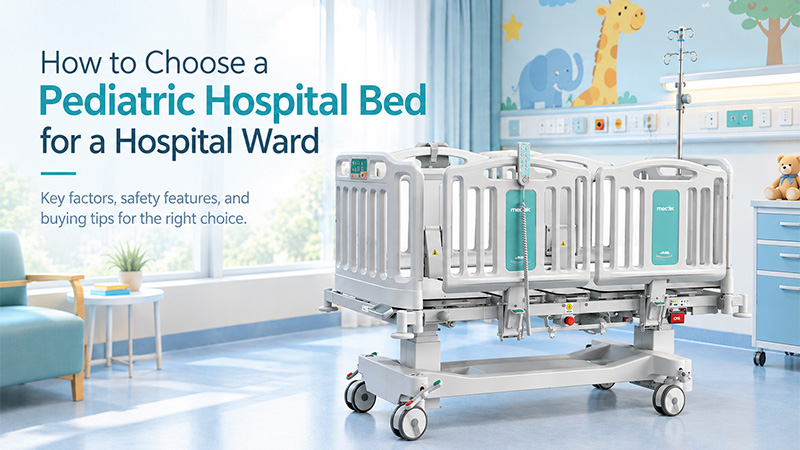
Selecting the right pediatric hospital bed is an important decision for hospitals, children's healthcare facilities, and medical equipment procurement teams. Unlike standard adult hospital beds, pediatric beds must accommodate the physical needs of younger patients while supporting safe nursing care, appropriate positioning, and efficient daily operations.
However, not every pediatric patient requires the same type of bed. Age, body size, mobility, medical condition, and the level of care provided by the hospital ward can all influence the selection process.
This guide explains the key factors hospitals should consider when choosing a pediatric hospital bed, from safety features and bed dimensions to adjustment functions, maintenance, and supplier evaluation.
1. Understand the Needs of Your Pediatric Ward
Before comparing products, hospitals should identify the intended patient population and clinical environment. A bed designed for general pediatric care may not be appropriate for infants or children who require intensive monitoring.
Common applications include:
• General pediatric wards: Beds for children receiving routine inpatient treatment and recovery care.
• Children's hospitals: Pediatric beds designed to support different age groups and clinical needs.
• Pediatric intensive care units (PICUs): Beds selected according to the positioning, monitoring, access, and safety requirements of critically ill children.
• Pediatric rehabilitation facilities: Beds that support appropriate positioning and caregiver assistance during rehabilitation.
• Specialized pediatric care units: Beds selected for children with specific mobility, positioning, or supervision requirements.
Hospitals should define the intended patient size range, care activities, and clinical requirements before requesting quotations. This helps ensure that the selected bed is suitable for its intended use rather than simply being a smaller version of an adult hospital bed.
2. Evaluate Pediatric Hospital Bed Safety Features
Safety should be one of the first considerations when selecting a pediatric hospital bed. Children may move unpredictably, explore their surroundings, or require different levels of supervision depending on their age and medical condition.
Side Rails and Enclosure Design
Side rails can help reduce the risk of falls when appropriately designed and used. Hospitals should evaluate rail height, spacing, locking mechanisms, structural stability, and compatibility with the intended mattress.
The complete bed system matters. A mattress that is too thick or incompatible with the rails may change the effective protective height or create gaps. Hospitals should therefore assess the bed frame, mattress, rails, and accessories together.
For younger children or patients who require a more enclosed sleeping environment, a purpose-designed pediatric bed may be more appropriate than a conventional hospital bed with standard side rails.
Bed Stability and Locking System
A stable bed frame and reliable caster brakes help prevent unintended movement during nursing procedures, patient transfers, and routine care.
When evaluating a pediatric bed, check:
• The stability of the frame under normal operating conditions.
• The reliability and accessibility of the caster locking system.
• Whether the brakes are easy for staff to operate.
• Whether the bed remains stable during adjustment and patient transfers.
The locking configuration should match the ward's workflow and the manufacturer's instructions.
Entrapment Risk and Mattress Compatibility
Entrapment risks can arise when a child becomes caught between the mattress, side rails, or other parts of the bed system. The risk depends on the design, the patient's size and characteristics, and how the bed is configured.
Hospitals should request documentation showing that the bed is intended for the relevant pediatric population. They should also confirm mattress dimensions, permitted accessories, and applicable safety requirements.
Adult hospital-bed entrapment guidance should not automatically be treated as a pediatric dimensional standard. The FDA specifically notes that its adult-focused dimensional guidance is not directly appropriate for children in most cases.
3. Choose the Right Bed Dimensions and Weight Capacity
Pediatric hospital beds are available in different sizes and configurations. Choosing the correct dimensions requires more than checking whether the bed fits inside the room.
Hospitals should consider the following factors:
• Patient height and body size: Confirm that the mattress platform provides suitable support for the intended patient population.
• Mattress dimensions: Check the exact mattress length, width, thickness, and compatibility with the bed frame and rails.
• Safe working load: Verify the manufacturer's stated limit and ensure that it is suitable for the intended patient and accessories.
• Overall bed dimensions: Allow sufficient space for staff access, patient transfers, and bedside equipment.
• Bed height: Consider the height of caregivers, patient transfer procedures, and the needs of children who may enter or leave the bed independently.
There is no single set of dimensions suitable for every pediatric hospital bed. Hospitals should compare the manufacturer's specifications with their own clinical requirements rather than relying on a generic size range.
4. Decide Between Manual and Electric Pediatric Hospital Beds
The appropriate adjustment system depends on the ward's care requirements, budget, and workflow.
Manual Pediatric Hospital Beds
Manual pediatric beds use mechanical adjustment systems, such as hand cranks or other manual controls, depending on the model.
Potential advantages include:
• A relatively straightforward mechanical structure.
• No dependence on an electric motor for manual adjustment.
• Potentially lower initial purchase costs, depending on the configuration.
• Suitability for wards with basic positioning requirements.
Hospitals should check which sections can be adjusted, how much physical effort is required, and whether the adjustment mechanism is practical for routine nursing work.
Electric Pediatric Hospital Beds
Electric pediatric beds use powered controls to adjust selected bed functions. Depending on the model, these may include backrest adjustment, bed height, or other positioning functions.
Potential advantages include:
• Convenient adjustment through hand controls or other specified controls.
• Less manual effort when repositioning patients.
• Greater flexibility when multiple adjustment functions are needed.
• Potentially more efficient bedside care workflows.
Before purchasing an electric pediatric bed, confirm the available functions, electrical specifications, control accessibility, cleaning requirements, and procedures for power failure or emergency operation.
The best choice is not necessarily the bed with the most functions. Hospitals should select a configuration that matches actual clinical needs and staff workflows.
5. Consider Positioning, Patient Access, and Caregiver Convenience
Bed functions should be evaluated according to their practical value in the intended ward.
Important considerations include:
• Backrest adjustment: Useful when the selected model supports the positioning needs of the patient.
• Height adjustment: Can help caregivers perform certain bedside tasks and assist with transfers, where available.
• Side rail operation: Rails should be easy for trained staff to operate while remaining appropriate for the intended patient group.
• Patient access: The bed should allow staff to provide care without unnecessary obstruction.
• Control placement: Controls should be accessible to caregivers and managed appropriately to prevent unintended operation.
• Mobility: If the bed needs to be moved regularly, evaluate its casters, brakes, and maneuverability.
Not all pediatric beds provide the same functions. Hospitals should verify each feature against the manufacturer's technical specifications instead of assuming that every pediatric bed includes electric height adjustment or other advanced functions.
6. Check Cleaning, Infection Control, and Maintenance Requirements
Pediatric beds are used frequently, so their materials and construction should support routine cleaning and maintenance.
When comparing products, consider:
• Surfaces that can be cleaned using the facility's approved disinfectants.
• Materials and finishes suitable for the intended healthcare environment.
• Accessible areas that allow thorough cleaning.
• Durable frame construction and reliable adjustment mechanisms.
• Availability of replacement parts and technical support.
• Clear instructions for inspection, cleaning, and preventive maintenance.
Hospitals should confirm chemical compatibility with the manufacturer, particularly when selecting disinfectants for plastic components, coated metal surfaces, and control systems.
A maintenance plan should include regular inspection of rails, brakes, fasteners, adjustment mechanisms, and other safety-related components. Any damaged or malfunctioning bed should be assessed and managed according to facility procedures and the manufacturer's instructions.
7. Compare Pediatric Hospital Bed Specifications Before Purchasing
Once the clinical requirements have been established, procurement teams can compare shortlisted products using a consistent specification checklist.
| Evaluation item | What to confirm |
|---|---|
| Intended patient group | Age, body size, and clinical application |
| Overall dimensions | Length, width, and height |
| Mattress | Dimensions, thickness, and compatibility |
| Safe working load | Manufacturer's specified limit |
| Side rails | Design, spacing, locking, and suitability |
| Adjustment functions | Manual or electric functions available |
| Mobility | Caster size, brakes, and maneuverability |
| Materials | Durability and cleaning compatibility |
| Safety documentation | Applicable standards, test reports, and intended use |
| Maintenance | Spare parts, warranty, and service arrangements |
| Customization | Available colors, configurations, and accessories |
Hospitals should request technical data sheets, user manuals, relevant conformity documentation, and written confirmation of any special requirements.
For distributors and medical equipment importers, it is also useful to evaluate the manufacturer's production capacity, quality management processes, export experience, and ability to maintain consistent specifications across repeat orders.
8. Choose a Pediatric Hospital Bed Manufacturer Carefully
The product itself is only one part of a successful purchasing decision. The manufacturer's technical support, documentation, and supply capabilities also matter.
Before placing an order, consider:
• Product suitability: Can the manufacturer recommend a model that matches the intended patient population and ward requirements?
• Technical documentation: Are the specifications, user instructions, and applicable conformity documents available for review?
• Quality assurance: Can the manufacturer explain its quality management processes and product inspection procedures?
• Customization options: Are alternative configurations or appearance options available when required?
• After-sales support: Are spare parts, warranty terms, and maintenance guidance clearly defined?
• Project requirements: Can the supplier support the quantities, delivery schedule, packaging, and documentation required for the hospital project?
Comparing these factors helps procurement teams evaluate overall suitability rather than choosing solely on initial price.
9. Pediatric Hospital Beds vs. Hospital Baby Cribs
Pediatric hospital beds and hospital baby cribs serve different patient groups and should not be treated as interchangeable products.
Pediatric hospital beds are generally intended for children who require inpatient care and whose size and clinical needs are appropriate for the selected bed. Hospital baby cribs or bassinets are designed for newborns and infants, depending on the specific model and its stated intended use.
For example, a newborn bassinet may feature a transparent sleeping basin that allows caregivers to observe the infant. A pediatric hospital bed may instead provide a larger sleeping surface, side rails, and adjustment functions appropriate to its intended patient group.
Hospitals should assess the patient's size, developmental stage, clinical requirements, and the manufacturer's intended use before selecting either type.
Explore our pediatric hospital beds for children's inpatient care, or view our hospital baby cribs and bassinets for newborn and infant care.
Conclusion
Choosing a pediatric hospital bed requires a clear understanding of the children who will use it and the clinical environment in which it will operate. Hospitals should prioritize appropriate dimensions, a compatible mattress and rail system, reliable construction, suitable adjustment functions, and documented safety requirements.
By defining these needs before requesting quotations, procurement teams can compare products more effectively and select beds that support pediatric care, caregiver workflows, and long-term maintenance requirements.
 English
 Française
 Español
 中文