Medik Blog
Hospital Bed Maintenance Guide: Cleaning, Care & Extending Lifespan
A hospital bed is a long-term investment in patient care, comfort, and safety. Whether used in a home care environment or a clinical setting, proper maintenance is essential to ensure hygiene, prevent mechanical failure, and maximize the lifespan of the equipment.
In this guide, we’ll cover how to clean a hospital bed, essential maintenance routines, and expert tips to keep your medical bed performing at its best.
Why Hospital Bed Maintenance Is Important
Consistent hospital bed maintenance goes beyond appearance—it directly impacts patient health and equipment reliability.
• Infection control: High-touch surfaces such as bed rails and remotes can harbor bacteria if not cleaned regularly
• Patient safety: Faulty motors, loose rails, or worn components increase the risk of injury
• Extended lifespan: Well-maintained hospital beds can last 8–15+ years depending on type
• Cost efficiency: Preventive maintenance reduces expensive repairs and downtime
Neglecting routine care often leads to avoidable breakdowns and higher replacement costs.
Hospital Bed Maintenance Checklist
A structured checklist ensures nothing is overlooked.
1. Daily Checks
• Inspect power cords and connections
• Test remote control and bed adjustments
• Wipe down high-touch surfaces (rails, controls)
• Listen for unusual noises
These quick checks help detect issues early before they escalate.
2. Weekly Cleaning Routine
• Clean the bed frame with mild detergent
• Disinfect side rails and control panels
• Wipe remote controls carefully
• Remove dust and debris from casters
Routine cleaning is key to maintaining hygiene and preventing buildup.
3. Monthly Inspection
• Tighten bolts and screws
• Inspect frame for wear or corrosion
• Test motors and moving parts
• Check mattress condition
• Lubricate mechanical joints if needed
Regular inspections reduce the risk of unexpected equipment failure.
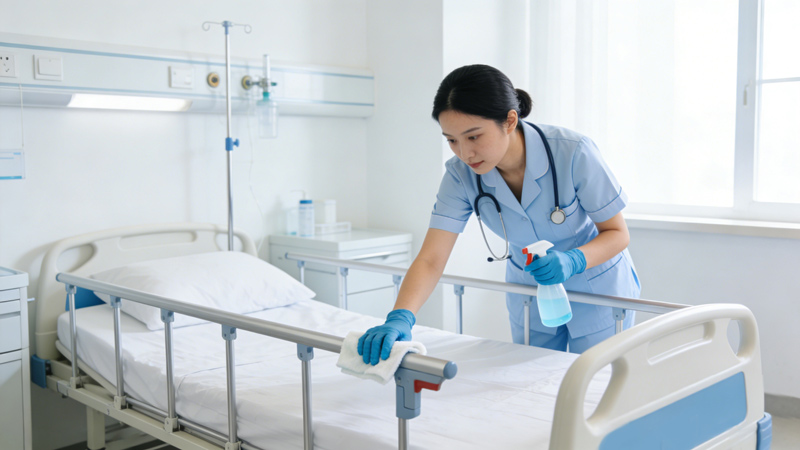
How to Clean a Hospital Bed (Step-by-Step)
Proper cleaning is essential for infection control and equipment longevity.
1. Unplug the Bed
Always disconnect power before cleaning to avoid electrical hazards.
2. Remove and Wash Bedding
Use hot water and antibacterial detergent to eliminate germs.
3. Clean the Bed Frame
Use a mild cleaner followed by a disinfectant. Focus on joints and high-contact areas.
4. Disinfect High-Touch Surfaces
Pay close attention to:
• Side rails
• Remote controls
• Adjustment handles
5. Clean the Mattress
• Use appropriate disinfectant
• Avoid soaking foam materials
• Allow full drying before reuse
6. Dry All Components
Moisture can lead to bacterial growth and metal corrosion.
Deep Cleaning & Disinfection
In addition to routine cleaning, perform deep cleaning:
• Every 1–3 months
• After illness or contamination
Use hospital-grade disinfectants and avoid direct liquid exposure to electrical parts.
Mattress Care Tips
Proper mattress maintenance improves comfort and durability:
• Rotate regularly to prevent uneven wear
• Inspect for sagging or damage
• Check air mattresses for leaks
• Avoid excessive moisture on foam materials
Replacing worn mattresses ensures proper patient support and pressure relief.
Key Components That Require Maintenance
Certain parts require extra attention:
• Side rails: Ensure locking mechanisms function properly
• Casters (wheels): Keep clean and replace if movement is restricted
• Motors: Watch for slow or noisy operation
• Power cords: Replace immediately if damaged
Timely maintenance prevents small issues from becoming major failures.
Hospital Bed Lifespan: What to Expect
The lifespan of a hospital bed varies:
• Manual beds: 15–20 years
• Semi-electric beds: 10–15 years
• Full electric beds: 8–15 years
Proper hospital bed care and maintenance can significantly extend these timelines.
Repair vs. Replacement
Choose repair if:
• The issue is isolated
• The bed is relatively new
• The repair cost is under 50% of replacement
Choose replacement if:
• Multiple systems fail
• Safety is compromised
• Parts are no longer available
Pro Tips to Avoid Costly Repairs
• Follow a consistent maintenance schedule
• Train caregivers on proper usage
• Keep a maintenance log
• Address minor issues immediately
Preventive care is the most effective way to reduce long-term costs.
Final Thoughts
Effective hospital bed maintenance is essential for safety, hygiene, and durability. With proper cleaning routines and regular inspections, you can:
• Extend equipment lifespan
• Improve patient safety
• Maintain a hygienic care environment
• Avoid unnecessary repair costs
Investing time in maintenance today ensures reliable performance for years to come.
References
1. Harmony Home Medical. Hospital Bed Maintenance, Cleaning, Care and Lifespan Guide.
2. AGTA Homecare. Hospital Bed Maintenance Tips.
3. Vitality Medical. How to Clean and Maintain Your Home Hospital Bed.
4. MedShop Direct. Hospital Bed Maintenance: Avoid Costly Repairs.
Related Blogs
1. What Size is a Hospital Bed?
2. How Much Does a Hospital Bed Cost?
3. Why Do Hospital Beds Have Side Rails?
4. How Many Types of Hospital Beds?
5. What Are The Main Hospital Bed Parts?
 English
 Française
 Español
 中文
中文